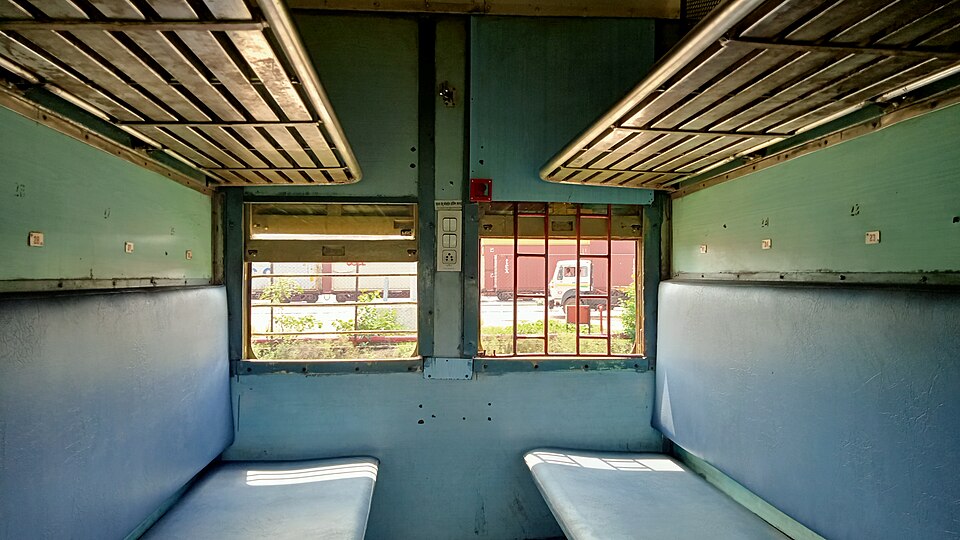
Photo: Kishlay RF · CC BY-SA 4.0
Indian Railways: The Lifeline of India
Indian Railways stands as one of the world's largest railway networks and serves as the backbone of India's transportation system. With over 68,000 kilometers of track spanning the length and breadth of the country, it connects remote villages to bustling metropolises, carrying millions of passengers and tons of freight daily.
Network Overview and Scale
The Indian railway network is truly massive in scope. As of 2025, it operates over 13,000 passenger trains daily, serving more than 7,300 stations across the country. The system employs approximately 1.2 million people, making it one of the world's largest employers. Every day, Indian Railways carries over 23 million passengers, which is equivalent to moving the entire population of Australia!
The network spans four different track gauges, with the broad gauge (1,676 mm) being the most extensive at over 61,000 kilometers. The railway system connects all major cities and extends to the remotest corners of India, from the snow-capped mountains of Kashmir to the tropical beaches of Kerala.
Types of Indian Trains
Express and Superfast Trains
These are the premium long-distance services connecting major cities across India. Popular examples include the Rajdhani Express, Shatabdi Express, and Duronto Express. These trains offer faster travel times, better amenities, and air-conditioned coaches.
Mail Trains
Traditional long-distance trains that connect major cities but make more stops than express trains. They offer a good balance between speed and accessibility to smaller stations.
Passenger and Local Trains
These slower trains serve local and regional routes, stopping at most stations along their path. They are the most affordable option and serve as the primary mode of transport for daily commuters and rural populations.
High-Speed Trains
India's first high-speed rail corridor, the Mumbai-Ahmedabad bullet train project, is under construction and expected to be operational by 2028. This will introduce Japanese Shinkansen technology to Indian railways.
Modern Developments and Initiatives
Indian Railways has embarked on ambitious modernization programs in recent years. The introduction of Vande Bharat Express trains represents a significant leap forward, with these semi-high-speed trains capable of reaching speeds of 180 km/h. As of 2025, over 75 Vande Bharat trains are operational across various routes.
The railway system is also undergoing digital transformation with initiatives like:
- Online booking through the IRCTC website and mobile app, handling over 1 million bookings daily
- Real-time train tracking and passenger information systems
- Digital payment options at stations and on trains
- Wi-Fi connectivity at major railway stations
Classes of Travel
Indian trains offer various classes to suit different budgets and comfort preferences:
| AC First Class (1A) | Premium air-conditioned compartments with privacy |
| AC 2-Tier (2A) | Air-conditioned sleeper with curtains for privacy |
| AC 3-Tier (3A) | Most popular air-conditioned sleeper class |
| Sleeper Class (SL) | Non-air-conditioned sleeper, budget-friendly |
| Second Sitting (2S) | Reserved seating for day journeys |
Economic Impact and Sustainability
Indian Railways contributes significantly to India's economy, handling about 40% of the country's freight traffic. The railway system has committed to becoming a net-zero carbon emitter by 2030, making it the world's first railway network to achieve this goal. Solar panels are being installed across stations and trains, and electric locomotives are replacing diesel engines on major routes.
"Indian Railways is not just a mode of transport; it's a symbol of unity that connects every corner of our diverse nation, fostering economic growth and cultural exchange."
With ongoing infrastructure improvements, technological upgrades, and expansion projects, Indian Railways continues to evolve while maintaining its role as the affordable and accessible transport option for millions of Indians every day.