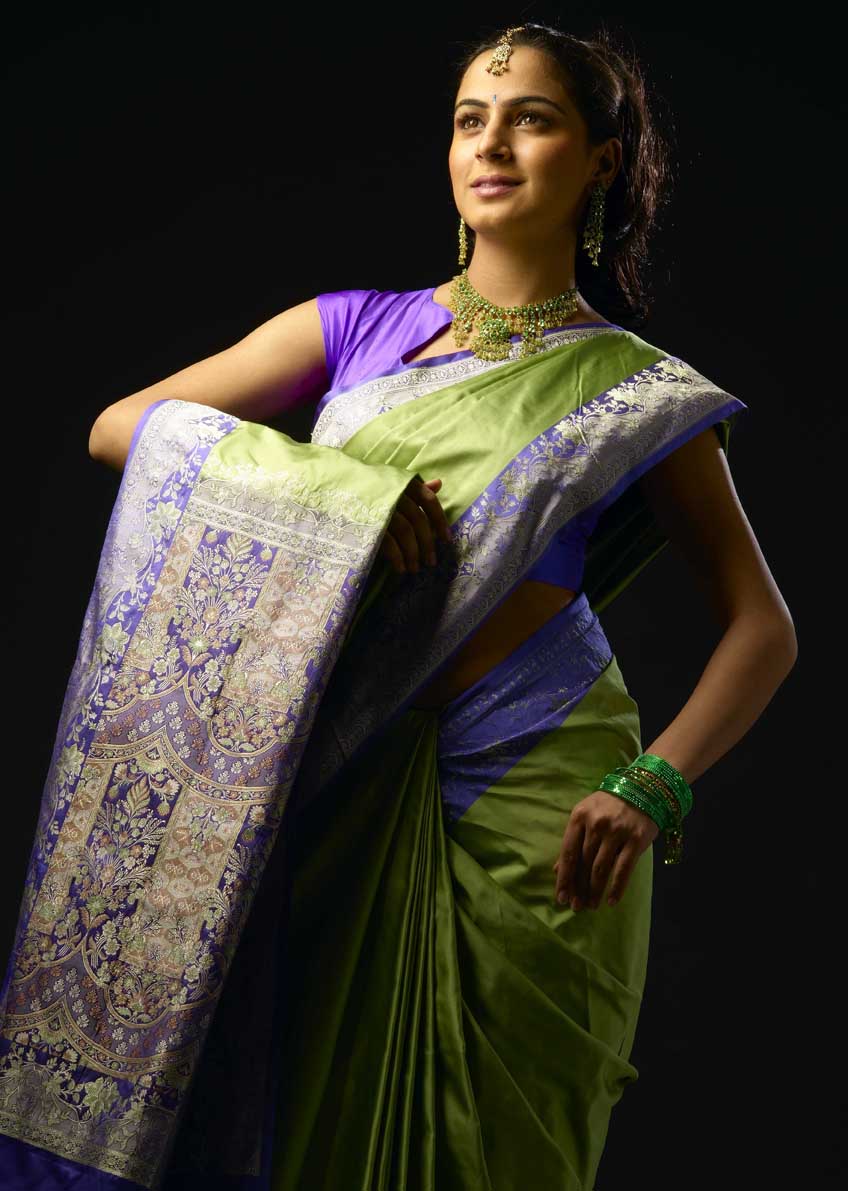
Photo: Sreekumar K. S. · CC BY 2.0
Traditional Indian Clothing: A Rich Tapestry of Culture and Style
Indian attire represents one of the world's most diverse and vibrant clothing traditions, with each region, community, and occasion calling for distinct styles that have evolved over thousands of years. From the elegant saree to the versatile kurta, Indian dress reflects the country's rich cultural heritage while adapting to modern lifestyles.
Women's Traditional Attire
The Saree
The saree remains India's most iconic garment, worn by over 75% of Indian women for special occasions. This unstitched cloth, typically 6-9 yards long, is draped around the body in various regional styles. Popular varieties include:
- Banarasi Sarees - Luxurious silk sarees from Varanasi with intricate gold brocade work
- Kanjeevaram Sarees - South Indian silk sarees known for their rich colors and temple motifs
- Chanderi Sarees - Lightweight cotton-silk blend from Madhya Pradesh
- Tant Sarees - Traditional handwoven cotton sarees from West Bengal
Salwar Kameez and Lehenga
The salwar kameez, consisting of a tunic (kameez), loose pants (salwar), and dupatta (scarf), originated in North India and has become widely popular across the country. The lehenga choli, featuring a flared skirt, fitted blouse, and dupatta, is favored for weddings and festivals, with the Indian ethnic wear market valued at approximately $13 billion as of 2024.
Men's Traditional Clothing
Kurta and Dhoti
The kurta, a loose-fitting tunic, serves as the foundation of men's traditional wear. Paired with various bottom garments, it adapts to different occasions:
- Dhoti - Unstitched cloth wrapped around the waist and legs, traditional across India
- Pajama - Loose trousers that complement the kurta for formal occasions
- Churidar - Tight-fitting trousers gathered at the ankles
Regional Specialties
Men's attire varies significantly by region. The lungi is popular in South India, while the achkan (long coat) and sherwani represent formal North Indian wear. The Nehru jacket, named after India's first Prime Minister, has gained international recognition as a sophisticated ethnic garment.
Regional Variations
North India
Northern states favor vibrant colors and heavy embroidery. Punjabi suits with phulkari work, Rajasthani ghagras with mirror work, and Kashmiri pherans showcase the region's artistic traditions.
South India
South Indian attire emphasizes handloom textiles and temple-inspired designs. The mundu (Kerala's traditional garment), Mysore silk sarees, and Pochampally ikkat represent the region's textile expertise.
East India
Bengali culture celebrates handwoven textiles like tant and jamdani sarees, while Assamese mekhela chador and Manipuri phanek reflect the Northeast's unique aesthetic.
West India
Gujarat and Rajasthan are known for their colorful textiles, bandhani tie-dye work, and elaborate mirror embroidery. The Maharashtrian nauvari saree and Gujarati chaniya choli represent distinctive regional styles.
Modern Adaptations and Fusion Wear
Contemporary Indian fashion seamlessly blends traditional elements with modern silhouettes. Indo-western fusion wear, including kurti tops with jeans, dhoti pants, and contemporary lehengas, appeals to younger generations. The Indian fashion industry, worth over $100 billion in 2024, continues to innovate while preserving cultural authenticity.
Fabrics and Textiles
India's textile tradition spans cotton, silk, wool, and synthetic blends. Handloom weaving employs over 4.3 million people, making India the world's second-largest textile producer. Traditional techniques include:
- Block printing from Rajasthan
- Chikankari embroidery from Lucknow
- Kalamkari painting from Andhra Pradesh
- Bandhani tie-dye from Gujarat
Indian attire continues to evolve, balancing tradition with contemporary needs while maintaining its status as a symbol of cultural identity and artistic expression.