India's Rich Linguistic Tapestry
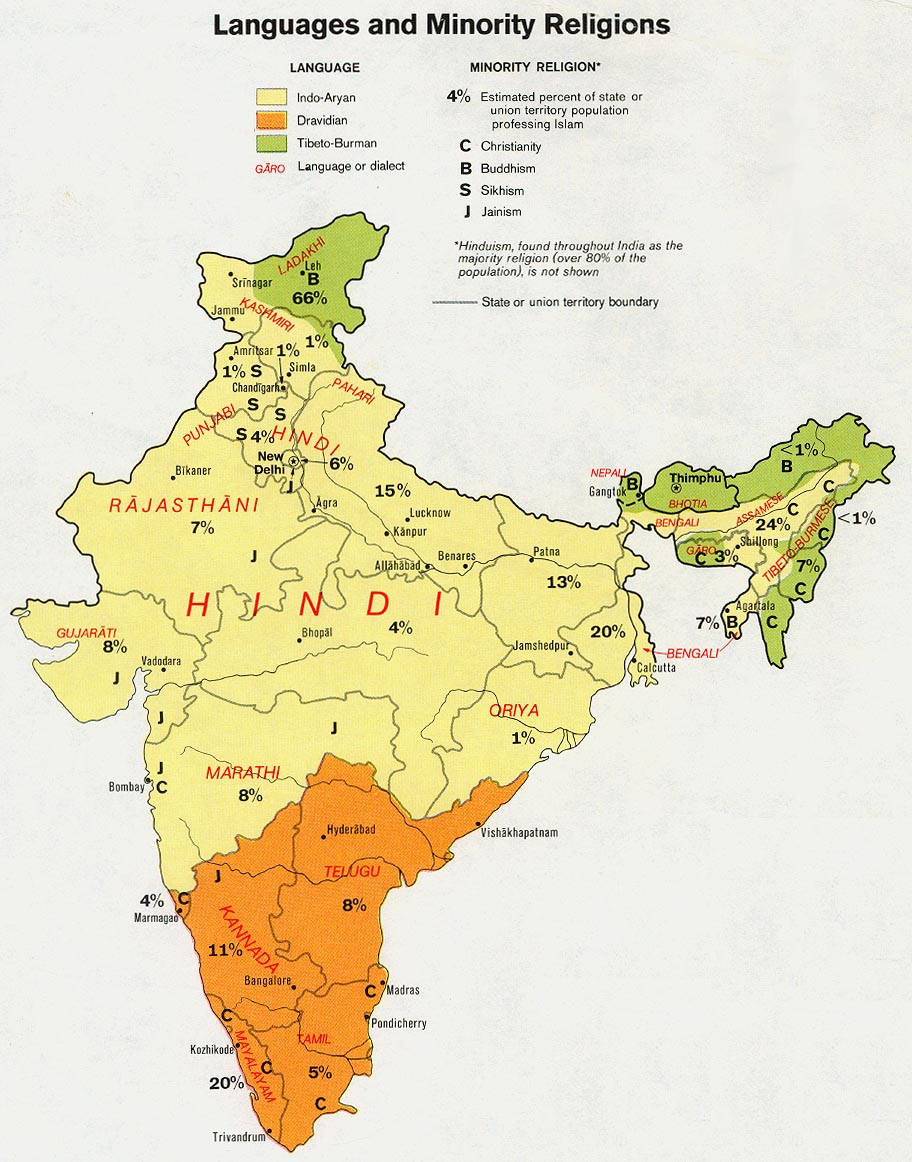
India stands as one of the world's most linguistically diverse nations, home to an extraordinary array of languages that reflect its cultural richness and historical depth. With over 1.4 billion people speaking hundreds of different languages, India's linguistic landscape is as varied as its geography.
Language Families and Distribution
Indian languages primarily belong to four major language families:
- Indo-Aryan languages (70%) - Part of the Indo-European family, these include Hindi, Bengali, Marathi, and Gujarati
- Dravidian languages (22%) - Predominantly spoken in South India, including Tamil, Telugu, Kannada, and Malayalam
- Austro-Asiatic languages (1.2%) - Including Santali and Mundari, mainly in eastern and central India
- Tibeto-Burman languages (0.8%) - Found primarily in northeastern states, including Bodo and Manipuri
Official Language Status
According to Article 343 of the Indian Constitution, Hindi in Devanagari script serves as the official language of the Union government. English continues as an associate official language, playing a crucial role in administration, judiciary, and higher education. Notably, the Constitution does not declare any language as the "national language" of India.
The 22 Scheduled Languages
The Eighth Schedule of the Constitution recognizes 22 languages, which receive official support and are used for various administrative purposes:
| Language | Speakers (millions) | Primary States |
|---|---|---|
| Hindi | 602 | Uttar Pradesh, Bihar, Madhya Pradesh, Rajasthan |
| Bengali | 97 | West Bengal, Tripura |
| Marathi | 83 | Maharashtra, Goa |
| Telugu | 82 | Andhra Pradesh, Telangana |
| Tamil | 69 | Tamil Nadu, Puducherry |
| Gujarati | 56 | Gujarat, Dadra and Nagar Haveli |
| Urdu | 51 | Jammu & Kashmir, Delhi, Uttar Pradesh |
| Kannada | 44 | Karnataka |
| Malayalam | 35 | Kerala, Lakshadweep |
| Odia | 38 | Odisha |
Hindi: India's Most Spoken Language
Hindi, spoken by over 600 million people as of 2024, serves as a lingua franca across northern and central India. It belongs to the Indo-Aryan branch and uses the Devanagari script, which is also used for Sanskrit, Marathi, and Nepali.
Regional Variations of Hindi
Hindi encompasses numerous dialects and regional variations, including:
- Khari Boli (basis for Standard Hindi)
- Awadhi (spoken in eastern Uttar Pradesh)
- Braj Bhasha (around Mathura region)
- Haryanvi (Haryana state)
- Rajasthani dialects
State Languages and Regional Diversity
Each Indian state has the autonomy to choose its official language(s). This creates a fascinating mosaic where administrative work, education, and cultural expression happen in the local language. For instance:
- Kerala uses Malayalam for official purposes
- Tamil Nadu conducts government business in Tamil
- West Bengal operates primarily in Bengali
- Punjab uses Punjabi written in Gurmukhi script
Language and Technology
India's digital revolution has embraced multilingualism. Major tech platforms now support Indian languages, with voice assistants understanding Hindi, Tamil, Bengali, and other regional languages. The government's Digital India initiative promotes content creation in local languages, making technology more accessible to India's diverse population.
Fascinating Language Facts
Malayalam, spoken in Kerala, is considered one of the longest palindromic language names in the world - it reads the same forwards and backwards!
The 2011 Census recorded 121 languages spoken by 10,000 or more people, while the total number of languages and dialects exceeds 1,600. This linguistic diversity reflects India's position as a cultural crossroads where ancient traditions meet modern aspirations, creating one of the world's most vibrant language ecosystems.