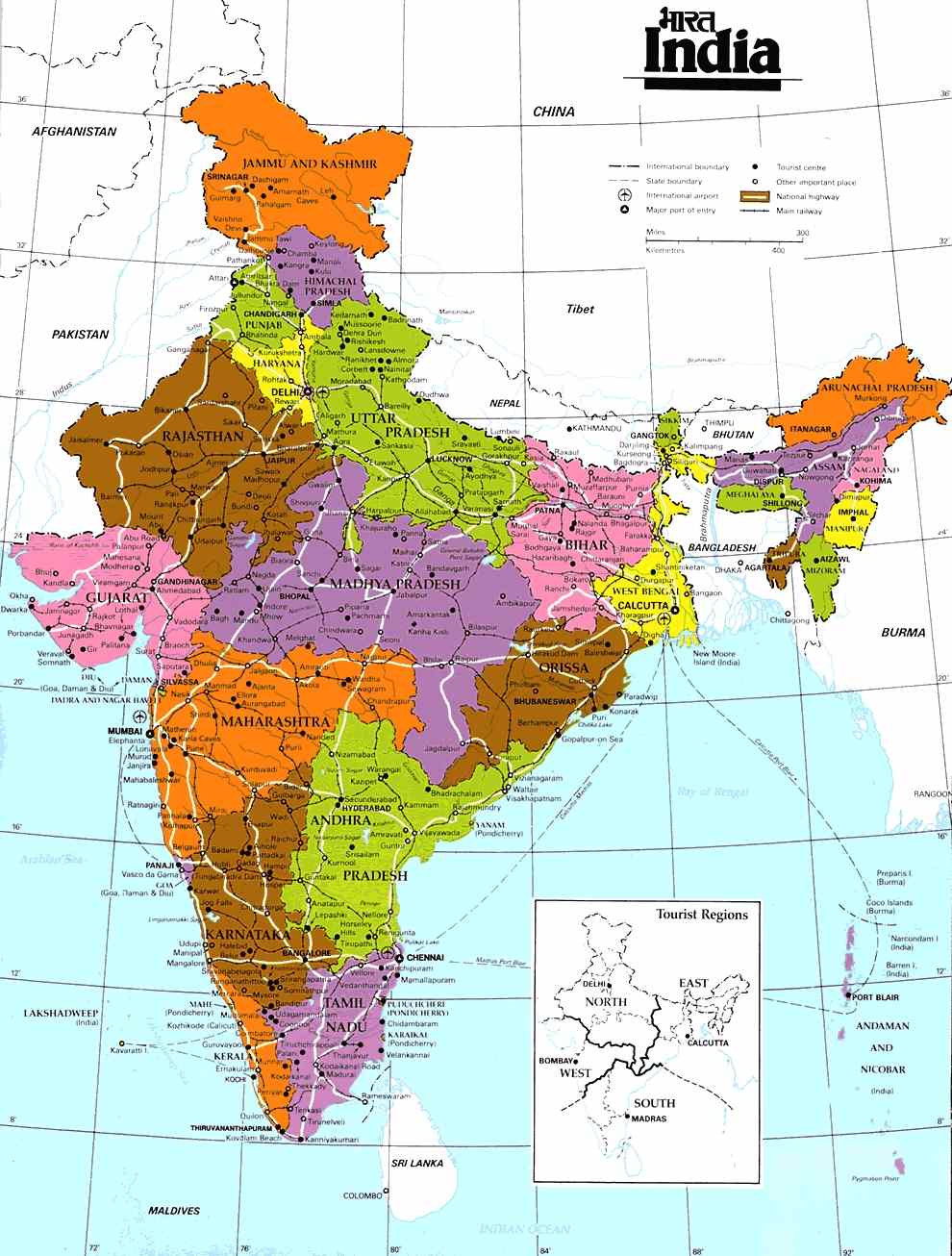
Understanding India's Federal Structure
India stands as the world's largest democracy, organized as a federal republic comprising states and union territories. This vast nation, home to over 1.4 billion people, operates under a parliamentary system where power is distributed between the central government and individual states, each with their own unique identity, culture, and governance structure.
Current Composition: 28 States and 8 Union Territories
As of 2025, India consists of 28 states and 8 union territories. This structure has evolved over decades, with the most recent change being the reorganization of Jammu and Kashmir in 2019, which was bifurcated into two union territories: Jammu & Kashmir and Ladakh.
Complete List of Indian States
- Andhra Pradesh (Capital: Amaravati)
- Arunachal Pradesh (Capital: Itanagar)
- Assam (Capital: Dispur)
- Bihar (Capital: Patna)
- Chhattisgarh (Capital: Raipur)
- Goa (Capital: Panaji)
- Gujarat (Capital: Gandhinagar)
- Haryana (Capital: Chandigarh)
- Himachal Pradesh (Capital: Shimla)
- Jharkhand (Capital: Ranchi)
- Karnataka (Capital: Bengaluru)
- Kerala (Capital: Thiruvananthapuram)
- Madhya Pradesh (Capital: Bhopal)
- Maharashtra (Capital: Mumbai)
- Manipur (Capital: Imphal)
- Meghalaya (Capital: Shillong)
- Mizoram (Capital: Aizawl)
- Nagaland (Capital: Kohima)
- Odisha (Capital: Bhubaneswar)
- Punjab (Capital: Chandigarh)
- Rajasthan (Capital: Jaipur)
- Sikkim (Capital: Gangtok)
- Tamil Nadu (Capital: Chennai)
- Telangana (Capital: Hyderabad)
- Tripura (Capital: Agartala)
- Uttar Pradesh (Capital: Lucknow)
- Uttarakhand (Capital: Dehradun)
- West Bengal (Capital: Kolkata)
Union Territories
- Andaman and Nicobar Islands (Capital: Port Blair)
- Chandigarh
- Dadra and Nagar Haveli and Daman and Diu (Capital: Daman)
- Delhi (National Capital Territory)
- Jammu and Kashmir (Capital: Srinagar/Jammu)
- Ladakh (Capital: Leh)
- Lakshadweep (Capital: Kavaratti)
- Puducherry (Capital: Puducherry)
Governance Structure
Each state operates with its own government, headed by a Chief Minister who leads the state cabinet. The Governor, appointed by the President of India, serves as the constitutional head of the state. States have significant autonomy in areas such as education, healthcare, agriculture, and law enforcement, while the central government handles defense, foreign policy, and interstate commerce.
Key Differences: States vs Union Territories
States enjoy greater autonomy and have their own elected governments, while Union Territories are directly administered by the central government through appointed administrators or Lieutenant Governors. However, Delhi and Puducherry are exceptions, having their own elected governments with limited powers.
Fascinating State Statistics
Largest by Area: Rajasthan covers 342,239 square kilometers, making it larger than many countries.
Most Populous: Uttar Pradesh houses over 240 million people, more than the entire population of Brazil.
Smallest State: Goa, at just 3,702 square kilometers, packs incredible diversity into a compact area.
Economic Powerhouse: Maharashtra contributes approximately 15% of India's GDP, making it the country's wealthiest state.
Cultural and Linguistic Diversity
India's states represent incredible diversity, with over 22 official languages and hundreds of dialects spoken across the nation. Each state maintains its distinct cultural identity, festivals, cuisine, and traditions, making India truly a "unity in diversity" showcase.
From the backwaters of Kerala to the deserts of Rajasthan, the tech hubs of Karnataka to the tea gardens of Assam, each state offers unique experiences and contributes to India's rich tapestry of culture, economy, and heritage.