Photo: Udayaditya Barua on Unsplash · Unsplash License
Introduction to Diwali
Diwali, the festival of lights, is one of the most significant and widely celebrated festivals in India. It is a five-day festival that usually falls between mid-October and mid-November, depending on the Hindu calendar. Diwali is a celebration of light over darkness, good over evil, and knowledge over ignorance.
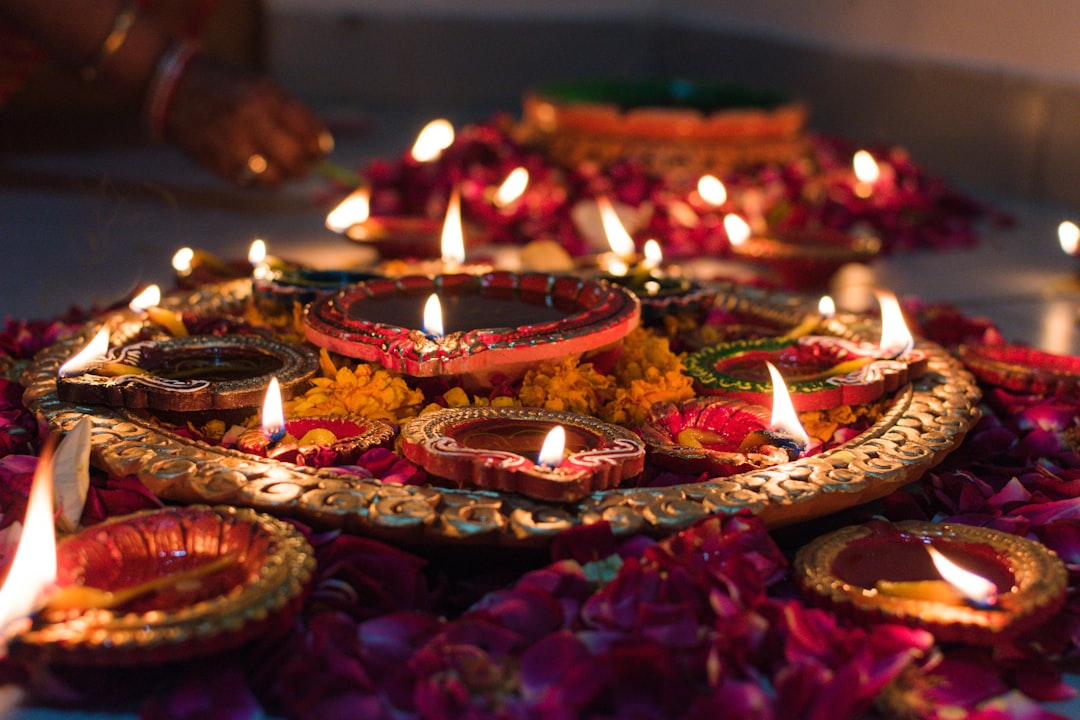
The word 'Diwali' is derived from the Sanskrit word 'Deepavali', which means 'row of lights'. During the festival, people light diyas (earthen lamps) and candles to symbolize the victory of light over darkness. Diwali is also known as 'Deepavali' in some parts of India.
History and Mythology of Diwali
The history and mythology of Diwali are deeply rooted in Hindu mythology. There are several legends associated with the festival, but the most popular one is the story of Lord Rama's return to Ayodhya after a 14-year exile. According to the legend, the people of Ayodhya lit diyas and candles to welcome Lord Rama and his wife Sita, and to celebrate their victory over the demon king Ravana.
Another legend associated with Diwali is the story of Lord Krishna's victory over the demon king Narakasura. According to the legend, Lord Krishna killed Narakasura on the day of Diwali, and the people of the kingdom celebrated the victory by lighting diyas and candles.
Significance of Diwali in Indian Culture
Diwali is a significant festival in Indian culture, and it is celebrated with great enthusiasm and fervor. The festival is a time for family and friends to come together, exchange gifts, and share traditional sweets and snacks.
The festival is also a time for spiritual reflection and renewal. Many people fast and pray during the festival, and it is considered a auspicious time for new beginnings and fresh starts.
Diwali Celebrations in Different Parts of India
Diwali is celebrated differently in different parts of India, reflecting the diversity and richness of Indian culture. In North India, Diwali is celebrated with great enthusiasm, with people lighting diyas and candles, and exchanging gifts and sweets.
In South India, Diwali is celebrated as a festival of lights, with people lighting diyas and candles, and worshiping the goddess Lakshmi. In West India, Diwali is celebrated as a festival of prosperity and wealth, with people worshiping the goddess Lakshmi and the god Ganesha.
Diwali Traditions and Customs
Diwali is a festival that is rich in traditions and customs. Some of the most popular Diwali traditions and customs include:
- Lighting diyas and candles to symbolize the victory of light over darkness
- Worshiping the goddess Lakshmi and the god Ganesha for prosperity and wealth
- Exchanging gifts and sweets with family and friends
- Fasting and praying for spiritual reflection and renewal
- Decorating homes and temples with rangoli and other decorations
Diwali is a festival that is celebrated with great enthusiasm and fervor, and it is a time for family and friends to come together and celebrate the victory of light over darkness.